

A water main replacement project on Euclid Avenue, plagued by inadequate information updates from the Village of Arlington Heights on traffic detours, road closures and timelines, continues to be plagued by lack of updates on traffic and closures; and a new issue arises with drinking water and residential water supply (see traffic article). Arlington Heights Road was down to one lane in each direction Saturday, Sunday and Monday; and remained in that condition after a complete closure overnight Monday/Tuesday.
The fiasco of lack of information about the Water Main Replacement project continues to plague the project as water supply for at least one resident near the construction site was apparently interrupted before a planned water supply interruption scheduled to occur on Wednesday, November 5, 2025. On Tuesday, November 4, 2025, the Village of Arlington Heights notified residents (water customers) via a front door posting of a planned interrupted water outage beginning 8:30 a.m. Wednesday, November 5, 2025. However, a resident in the area reported on the Neighbor app that “water has been on and off all morning” Tuesday, November 4, 2025 — ahead of the planned interruption. The homes affected by the planned water supply interruption are located along Euclid Avenue and along Haddow Avenue near the intersection of Euclid Avenue and Haddow Avenue.
“What’s going on with the water in this area? I was never notified of work being done even though obviously there’s a lot happening on Euclid. Water has been on and off all morning. Is it even safe to drink?”
— Neighbors app Tuesday morning Nov. 4
The Village Water Department will be performing repairs to the municipal water system in your neighborhood. Beginning at 8:30 a.m.on November 5, 2025, the water service to your home or place of business will be temporarily interrupted of 4-5 hours. ”
— Village of Arlington Heights Hand-Delivered Notice
The Village of Arlington Heights described the water interruption issue as requiring “water system repairs” but did not mention whether the issue was related to the Water Main Replacement Project on Euclid Avenue. Last night, the intersection of Arlington Heights Road and Euclid Avenue was closed to connect the new underground water main across Arlington Heights Road at Euclid Avenue. The letter posted on doors or hand delivered by public works indicates that a Precautionary Boil Order will be necessary when the water supply resumes after the work is performed Wednesday.
For the duration of the project during the summer, the Village of Arlington Heights has provided no guidance regarding safety precautions that might be necessary during the water main project. The Village of Arlington Heights neglected to provide any updates, such as how the new water main is being connected, or any timelines about when the new water main will be connected and put in service, or any guidance on being alert to changes in water pressure or water quality.
 Great Prices: Amazon Grocery Bottled Water
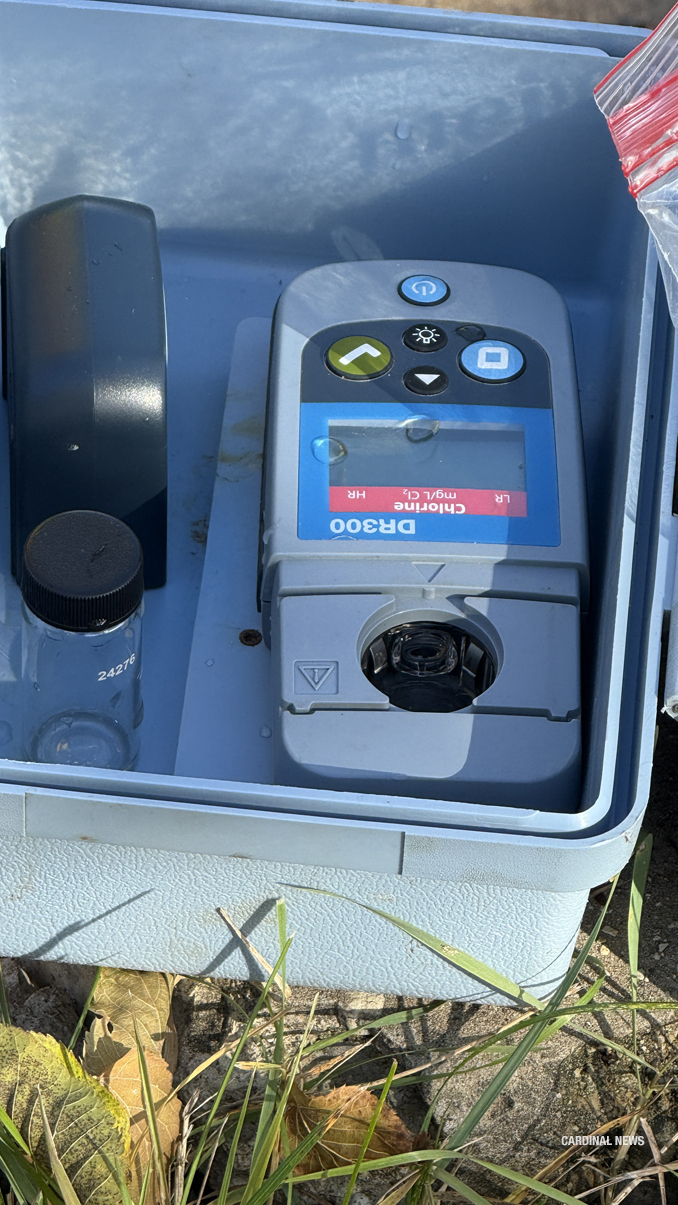
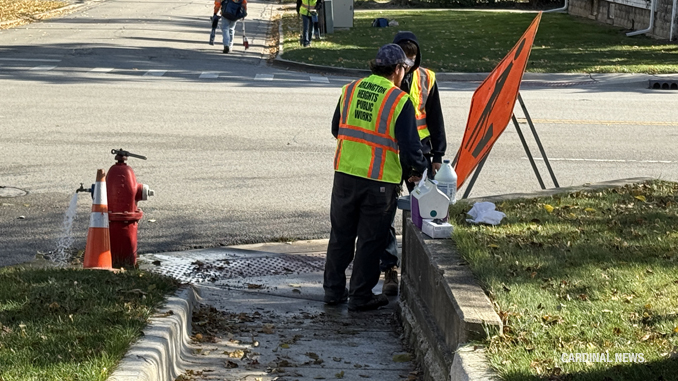
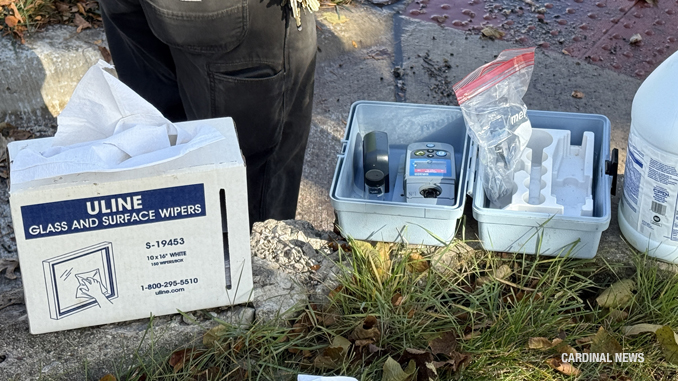
Public Works personnel were in the area Tuesday morning testing water safety at fire hydrants at Euclid Avenue and Evergreen Avenue, and Arlington Heights Road and Hawthorne Street in Arlington Heights.
The hand-delivered letter delivered by Public Works to a limited number homes Tuesday morning indicated that a Boil Order was necessary. There was no mention of the Boil Order on the village’s official Facebook page. Instead, there was only a somewhat diversionary and trivial post on the Village of Arlington Heights Facebook page Monday, November 3, 2025 about general trivial water volume topics, and about how village employees monitor and repair the water system around the clock. In that post there was no mention of the major water main project ongoing on Euclid Avenue. On Facebook, there was no mention of any specific issues existing near the Water Main Project, and no guidance on issues worthy of vigilance near the project. There also were no welcoming statement to emphasize and encourage the importance of reporting any water issues near the water main project. Also, there was no mention of the number of water customers that could potentially have service interruptions while construction crews place the new water main in service.
Following are the precautionary boil order details from the Village of Arlington Heights hand-delivered door notice given to residents …
“Water system repairs were required, and it was necessary to shut down the water main to make those repairs. When water pressure falls below 20 psi, it is necessary to issue a precautionary boil order because there is a chance that contaminants have entered the water distribution system. The Village maintains adequate chlorine levels before restoring service to the affected areas. A precautionary boil order was issued due to the repairs resulting in this red notice. The order will remain in effect until laboratory sampling confirms that the water is safe, typically 24 hours after the sample is received at the lab. Once the water samples have tested clear of coliforms, you will receive a second notice that will be a green notice. This notice will state that the precautionary boil order has been lifted. Customers in the area who receive this notice should boil water at least five minutes before using for cooking and drinking.
“Additionally, a recent study by the USEPA found that construction activity to repair or replace water mains MAY loosen lead containing particles that may end up in the residential waterlines. To decrease the chances of lead in your water, please remove and clean all faucet aerators and flush your service line prior to use. Flushing your service line consists of running the water in faucets for about FIVE minutes. You may see darker colored water and some sediment in the water. Run water until it runs clear. If water does not clear up, call public works.
For further information with regard to boil orders, visit the village of Arlington Heights website and search ‘Precautionary Boil Orders.'”
— Village of Arlington Heights
Coliforms are a group of bacteria found in the environment, such as soil and plants, and in the intestines of warm-blooded animals. While most coliforms are harmless, the presence of fecal coliforms, especially E. coli, indicates that water may be contaminated with fecal waste, which can contain disease-causing pathogens. Testing for coliforms is an important way to check if a water source, particularly drinking water, is safe.
Great Prices: Amazon Grocery Bottled WaterWhy Is Low Water Pressure an Issue in Water Mains?
When a water main break occurs, water is usually flowing in the street and buckling pavement, pushing up sod, and throwing silt into the street; the pressure in the underground water main is dropped, and the pressure delivered to residents is lower. With planned water main repairs, there is no buckling of payment or pushing up of sod, etc., but low water pressure can draw in contaminants to other pipes between the water main and your home.
Anytime you see a water main break near your home or your place of employment, you should not drink water from the tap or faucet. You should also stop drinking water from the tap if the water pressure is low coming out of the tap, until you at a minimum find the reason for the low water pressure so you can determine proper action. With a nearby water main project, you might not know there is an issue, unless Public Works notifies you. If you notice low water pressure near a water main construction project, you must notify Public Works.
Low water pressure and breaks in the integrity of water pipes can temporarily threaten safe tap water. While a water boil may remedy microbial contamination of drinking water, water boil treatment does not necessarily rid the water of other contaminants — such as pesticides, petroleum products, fertilizers, construction by-products, etc. that may be in the soil adjacent to a broken or open water main or other pipe with unknown integrity issues. In other words, we tend to focus on microbes that might make us sick in a few hours or days. But what about contamination by chemicals that might make us sick in years or decades?
Boiling water kills microbes, but remaining water may concentrate chemicals that don’t evaporate with steam rising above the remaining boiling water.
When there are leaks and breaks in the integrity of pipes carrying drinking water that go undetected, the potential for a negative pressure event exists. That means stuff outside the pipes might get inside the broken pipes, and into your drinking water. Normally, high water pressure — above 20 PSI, for example — keeps biological and chemical contaminants outside of the pipes. You don’t want to be drinking water where low pressure inside pipes might be allowing contaminants from nearby sewer lines to be drawn into the pipes used for drinking water. Similarly, you don’t want to be drinking water that might be supplied in pipes that are drawing in soil contaminants where lawn fertilizer, weed killers, or gasoline, etc. are lurking in the soil. What if your neighbor has a leaky septic tank; or think of all the lawn applications of weed chemicals and fertilizers you see in the neighborhood during the summer. You don’t want to be drinking water from low pressure pipes.
Sewer lines carrying feces and human waste are supposed to be a significant distance from drinking water supply pipes, but if a low pressure event is allowing feces and other sewer contaminants to be drawn in to the low pressure drinking water supply pipe from nearby soil contamination, that is an issue.
Soil contaminants will flow from a relatively higher pressure to a lower pressure. If contaminants are in the soil — next to a broken water main that no longer has the pressure or integrity to keep chemicals and microbes out — those contaminants can enter the water distribution system. According to the EPA, any contaminant exterior to the distribution system may enter potable water supplies during a negative pressure event. Chemical contaminants could include pesticides, petroleum products, fertilizers, solvents, detergents, pharmaceuticals, construction by-products and other compounds. Predominant pesticides in urban areas include atrazine, simazine, prometon, and diazinon (Patterson and Focazio 2001). According to the EPA, other studies have detected insect repellants, fire retardants, and other industrial chemicals (Koplin et al. 2002). If chemical compounds intrude in sufficient concentration or volume, they might result in acute toxicity. Microbial contaminants are a concern because even with dilution, some microbes (e.g., viruses) could cause an infection with a single organism, according to the EPA.
This news article has been tagged and classified as a DTA (Don’t Tell Anyone/Don’t Tell Attitude) news story — part of an upcoming Cardinal News DTA campaign.
Get updates from The Cardinal ALL NEWS FEEDS on Facebook. Just ‘LIKE’ the ‘Arlington Cardinal Page (become a fan of our page). The updates cover all posts and sub-category posts from The Cardinal — Arlingtoncardinal.com. You can also limit feeds to specific categories. See all of The Cardinal Facebook fan pages at Arlingtoncardinal.com/about/facebook …
Help fund The Cardinal Arlingtoncardinal.com/sponsor